
Pet Waste & Odor Control
Tackle pet waste effectively with hydrogen peroxide cleaners, sanitization methods, and deodorizing strategies.
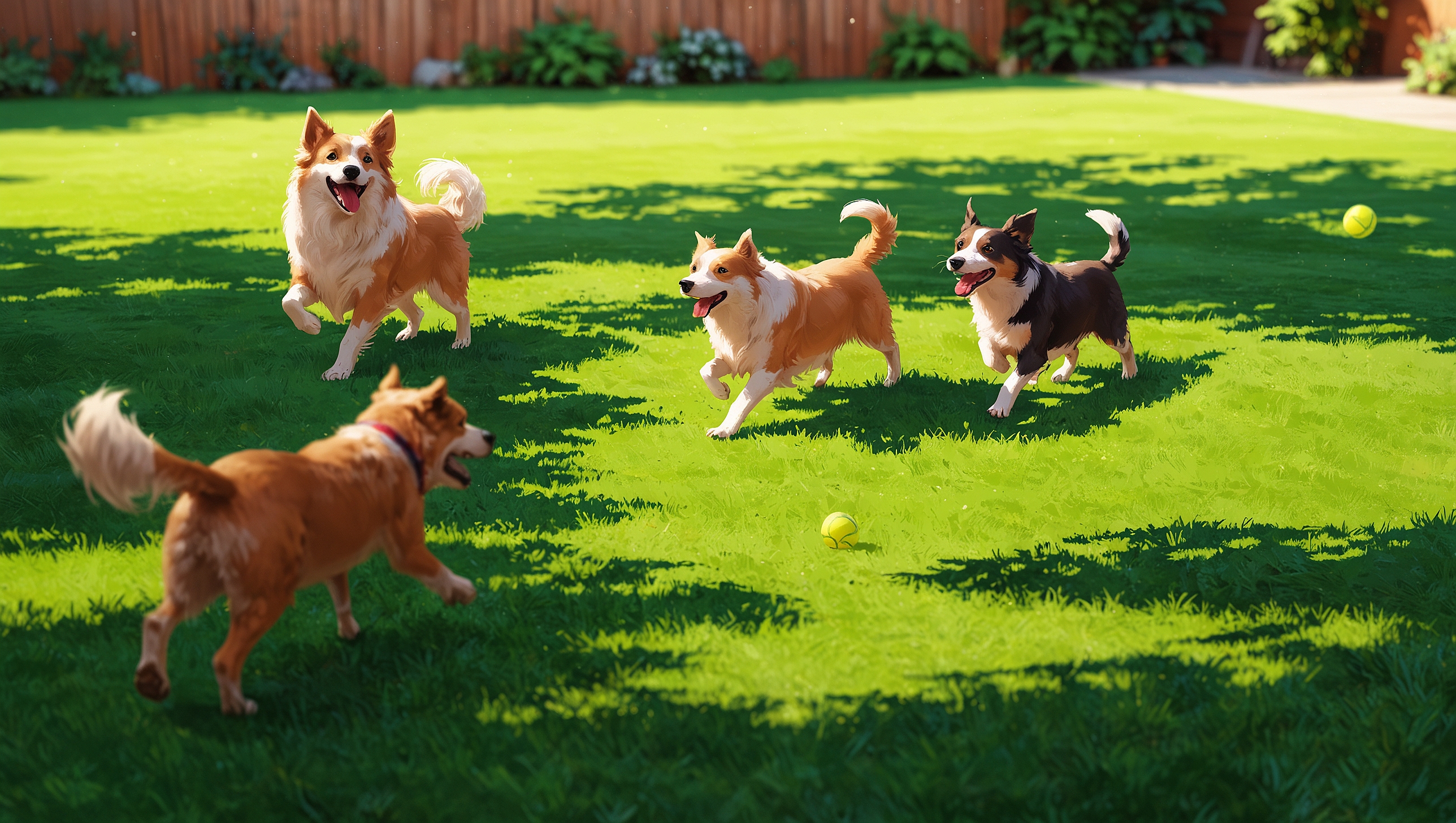
The Pet Owner's Challenge
If you have pets and artificial turf, this is probably the chapter you have been waiting for. Pet odor is the number one complaint among turf owners, and it is the reason many people think about ripping theirs out entirely.
Here is the good news: pet odor on artificial turf is completely fixable. Not just manageable, but fully eliminated. Most people fail because they are cleaning the surface when the real problem lives in the infill underneath. This chapter gives you the products, the steps, and the ongoing system to solve it for good.
Why the Smell Keeps Coming Back
When your pet urinates on the turf, the liquid drains through the fibers and soaks into the infill. If you rinse it within the first few hours, you can flush most of it away. No big deal.
But anything you miss starts to break down. Over the first week, bacteria in the infill turn it into ammonia, which is that familiar sharp smell. A good rinse still helps at this stage.
The real problem starts after about a week. A component called uric acid does not dissolve in water. It dries into tiny crystals that bond to the infill and fibers. These crystals can sit there for years. Every time it gets warm or humid, they release that awful recurring stink. No amount of rinsing will wash them away because water simply cannot dissolve them.
Did You Know
This is the key insight: The reason pet odor "comes back" after rain or on hot days is not new urine. It is old uric acid crystals being reactivated by moisture and heat. You need a product that actually breaks down those crystals, not just rinses around them.
Why Common DIY Solutions Do Not Last
These approaches all seem logical, and they do provide temporary relief. But none of them can break down uric acid crystals.
- Water rinsing: Washes away surface-level contamination but cannot dissolve the crystals. Essential for maintenance, but not a fix for established odor.
- Vinegar: Temporarily neutralizes ammonia smell, but the crystals are still there. Once the vinegar evaporates and moisture returns, so does the stink.
- Baking soda: Absorbs some airborne odor (like it does in your fridge), but does not touch the source embedded in the infill.
- Bleach: Do not use it. It reacts with ammonia in pet urine to create toxic fumes, it damages turf fibers, and it voids most warranties. The odor comes right back anyway.
Warning
Safety warning: Never apply bleach to turf that has been exposed to pet urine. The chemical reaction produces chloramine gas, which is hazardous to breathe.
The Real Solution: Hydrogen Peroxide
Hydrogen peroxide-based cleaners are the most effective consumer product for permanently eliminating pet urine odor from turf. They work through oxidation, destroying uric acid crystals, bacteria, and organic waste on contact. The chemical reaction converts these contaminants into harmless, odorless compounds that rinse away with water.
Unlike traditional cleaners that need specific temperature ranges or extended dwell times, hydrogen peroxide works immediately in any weather. It is non-toxic, leaves no residue, and is completely safe for pets and children once dry.
Pro Tip
Hydrogen peroxide cleaners work in any temperature, making them effective year-round. No waiting for mild weather or worrying about the product going dormant in cold conditions. Apply any time you notice an odor.
Choosing the Right Product
Here are the top options for artificial turf pet odor control.
Turf Mist Pet Odor Eliminator (Our Top Pick)
Turf Mist is a hydrogen peroxide-based formula designed specifically for artificial turf. It eliminates 99.9% of contaminants on contact through oxidation. The formula is non-toxic, eco-friendly, and completely pet-safe once dry. Available in 1-gallon bottles and bulk packs (4 and 12 packs) for larger properties or multi-pet homes. Also comes with a dedicated pump sprayer for easy, even application. Made in USA.
Diluted Hydrogen Peroxide (3%)
Standard 3% hydrogen peroxide from any pharmacy works in a pinch. Mix 1:1 with water, spray on affected areas, and let it sit for 10 to 15 minutes. It is cheap and effective, but breaks down in sunlight faster than turf-specific formulations. About $3 to $5 per bottle. Good as a budget backup.
Zeolite Deodorizer Granules (ZeoFill)
A volcanic mineral that naturally absorbs and traps odor molecules in the infill between treatments. Not a replacement for hydrogen peroxide treatment, but an excellent companion product for continuous odor absorption. About $15 to $25 per 25 lb bag.
Recommended Product
Our recommendation for most pet owners: Use Turf Mist as your primary cleaner for both deep treatments and routine maintenance. Add zeolite deodorizer granules (like ZeoFill) to the infill for continuous odor absorption between treatments. This two-product system tackles the immediate problem and provides long-term prevention.
Hydrogen Peroxide vs Enzymatic Cleaners
Enzymatic cleaners (like TurFresh BioS+ and BioTurf) use live bacteria to break down organic waste over time. They work, but have some significant limitations compared to hydrogen peroxide.
- Speed: Enzymatic cleaners need 24 to 72 hours and must stay moist. Hydrogen peroxide works on contact in 10 to 15 minutes.
- Temperature: Enzymatic bacteria go dormant below 50 degrees and die above 90. Hydrogen peroxide works in any temperature.
- Convenience: Enzymatic cleaners cannot be used within 48 hours of any disinfectant. Hydrogen peroxide has no such restrictions.
- Residue: Enzymatic cleaners can leave residue that attracts dirt. Hydrogen peroxide breaks down into water and oxygen, leaving nothing behind.
For these reasons, we recommend hydrogen peroxide-based products as the primary approach for turf odor control.
Step-by-Step Pet Odor Treatment
This protocol is for turf with an established smell, not a one-time accident. Follow every step in order.
Remove All Solid Waste
Walk the entire turf and pick up all solid waste with a bag or scooper. Rinse each spot with a direct hose stream for at least 10 seconds. Do not scrub waste into the turf.
Find All the Problem Areas
Pet urine is not always visible. A UV blacklight ($10 to $20 at pet stores) reveals urine residue that glows under the light. Use it at dusk and mark the boundaries of each affected zone with small flags or cones. You may be surprised how large the area really is.
No UV light? Watch your pet for a few days to identify their favorite spots, and do the sniff test described in Chapter 3: Deep Cleaning across the whole lawn.
Pre-Rinse the Affected Areas
Wet every affected zone thoroughly with your garden hose. Spend at least 30 seconds per zone. This washes away loose surface contamination and rehydrates dried crystals so the hydrogen peroxide can reach them.
Apply Hydrogen Peroxide Cleaner Generously
Do not be stingy here. The cleaner needs to fully soak through the fibers and saturate the infill, because that is where the crystals live. Apply until you see the infill is visibly wet. Under-application is the most common reason treatment fails.
Work It Into the Infill
Use a stiff-bristle broom to gently press the cleaner down into the infill. Short, pressing motions work better than long sweeping strokes. You want to push the liquid deeper, not spread it sideways.
Let It Sit
Give the cleaner 10 to 15 minutes to work. For severe odor, let it sit up to 20 minutes. Hydrogen peroxide works through oxidation on contact, so it does not need to stay moist for hours like other products.
Rinse Thoroughly
Flush the treated areas with a strong stream from your hose until the runoff water is completely clear. You are washing away the broken-down waste that the hydrogen peroxide neutralized. Slightly discolored runoff at first is actually a good sign that the treatment worked.
Apply Deodorizer Granules
Spread zeolite deodorizer granules (like ZeoFill) across the treated areas and brush them into the infill. Zeolite is a natural mineral that absorbs odor molecules continuously between treatments. It does not replace hydrogen peroxide treatment, but it adds an extra layer of odor control.
Keep Pets Off Until Dry
Keep pets off the treated areas until the surface is dry, usually 30 to 60 minutes. This lets the deodorizer granules settle in and ensures the hydrogen peroxide has fully completed its oxidation process.
How Long Does It Take to Work?
Hydrogen peroxide works much faster than traditional cleaners. Here is what to expect based on how bad the problem is.
Mild Cases (Less Than 6 Months of Buildup)
One treatment usually shows immediate improvement. Follow up with a second treatment at day 7 to fully neutralize deep crystals. Expect the odor to be fully gone within 1 to 2 weeks.
Moderate Cases (6 to 18 Months of Buildup)
Two to three treatments spaced one week apart. Expect meaningful improvement after the first treatment and full resolution by week 3 to 4.
Severe Cases (18+ Months of Buildup)
Three to five treatments over 4 to 6 weeks. If significant odor persists after 5 full treatments, the infill is likely too saturated for surface treatment. At that point, partial infill replacement is the recommended next step.
Did You Know
How to track progress: Do the sniff test at the same time on the same day each week (consistent conditions matter). Rate the odor 1 to 10 and write it down. You should see the number drop with each treatment cycle.
Tips for Multi-Pet Households
More pets means more maintenance. Here is a quick guide based on your situation.
- One small dog: Daily quick rinse of the pet zone, weekly hydrogen peroxide spray, monthly deodorizer refresh. About 15 minutes per week.
- One large dog: Daily rinse, hydrogen peroxide spray twice per week, monthly deodorizer, quarterly deep treatment soak. About 25 minutes per week.
- Two or more dogs: Daily rinse, daily spot treatment of high-use areas, weekly full-zone hydrogen peroxide treatment, monthly deodorizer refresh. About 40 to 50 minutes per week.
Pro Tip
Train your pet to a designated spot. This is the single most effective long-term strategy. It concentrates all the maintenance to one small area, reduces product usage by 60 to 80 percent, and keeps the rest of your lawn in great shape. Most dogs learn within 2 to 4 weeks with consistent leash guidance and treats.
When Hydrogen Peroxide Treatment Is Not Enough
In cases of severe, long-term buildup (typically 2+ years without proper treatment), you may need more aggressive steps.
Partial Infill Replacement
This solves the problem in most severe cases. You vacuum out the top 1 to 2 inches of contaminated infill, treat the remaining infill and backing with hydrogen peroxide cleaner, rinse, let it dry, and add fresh infill. DIY cost is about $2 to $4 per square foot. For a typical 100-square-foot pet zone, that is $200 to $400 in materials.
Full Section Replacement
In rare, extreme cases (multiple large dogs and zero maintenance for years), the contamination may have soaked all the way through the backing and into the sub-base. This requires a professional to remove the turf section, replace the sub-base, and reinstall. It costs $8 to $15 per square foot, so get a professional inspection first to confirm it is truly necessary.
Did You Know
Cost perspective: Partial infill replacement at $2 to $4 per square foot is much cheaper than full turf replacement at $8 to $15 per square foot. In most cases, the problem is solvable without replacing the turf itself.
Your Ongoing Prevention Plan
Once the odor is gone (or if you are starting fresh), this simple routine keeps it from coming back.
Daily (5 Minutes)
- Pick up all solid waste right away
- Quick 30 to 60 second hose rinse of pet zones
Weekly (15 to 20 Minutes)
- Spray hydrogen peroxide cleaner on the main pet area
- Let it sit 10 to 15 minutes, then rinse
- Brush pet areas to prevent matting
Monthly (30 Minutes)
- Full hydrogen peroxide treatment of all pet zones
- Check and refresh deodorizer granules
- Do the sniff test to catch any new problem areas
Quarterly
- Deep hydrogen peroxide soak as part of your regular deep clean (see Chapter 3)
- Refresh deodorizer across the entire lawn
- Top off infill where needed
Pro Tip
Total time commitment: About 5 minutes a day plus 20 minutes a week plus 30 minutes a month. That is less than 2 hours per month for an odor-free yard. Prevention is dramatically easier than dealing with a smell that has gotten out of hand.
When to Call a Professional
Some situations are beyond DIY. Here is how to know when it is time to bring in help.
- You have done 5+ hydrogen peroxide treatments over 6 weeks and the smell has not improved by at least 50 percent
- The contamination has soaked through the infill into the backing or sub-base
- You need infill removed and replaced, which requires specialized equipment
For detailed guidance on choosing between DIY and professional services, see Chapter 8: DIY vs Hiring a Pro.
Frequently Asked Questions
Hydrogen peroxide-based cleaners like Turf Mist work on contact through oxidation. You should notice a significant improvement within 15 to 30 minutes of application. For severe buildup, you may need 2 to 3 treatments over a couple of weeks.
If you have done 3 or more hydrogen peroxide treatments over 6 weeks with no improvement, and the turf still smells on cool days, the infill is likely too saturated to save. At that point, removing and replacing the top 1 to 2 inches of infill in the problem area is the way to go.
Yes, and it is one of the smartest things you can do. Take your dog to the same spot on a leash every time, reward them when they go there, and most dogs learn within 2 to 4 weeks. This concentrates maintenance to one small zone and keeps the rest of your turf clean.
Yes. Turf-specific hydrogen peroxide cleaners like Turf Mist are non-toxic and completely pet-safe once dry, which usually takes 30 to 60 minutes. Keep pets off the treated area while it is still wet so the cleaner can fully soak in.
Not for long. Vinegar temporarily masks the ammonia smell and baking soda absorbs some airborne odor, but neither breaks down the uric acid crystals causing the problem. They are fine as a stopgap, but you need a hydrogen peroxide-based cleaner for a real fix.
Do not use bleach on turf. It reacts with ammonia in pet urine to create toxic fumes, it damages the fibers and voids most warranties, and it does not break down uric acid crystals anyway. The odor will come right back.
Get the Complete Turf Cleaning Handbook
All 8 chapters, bonus checklists, seasonal schedules, and product recommendations in a beautifully designed, downloadable PDF.
Buy the HandbookInstant download. 30-day money-back guarantee.