
Routine Maintenance
Learn the weekly brushing, rinsing, and debris removal schedule that keeps your turf looking pristine.
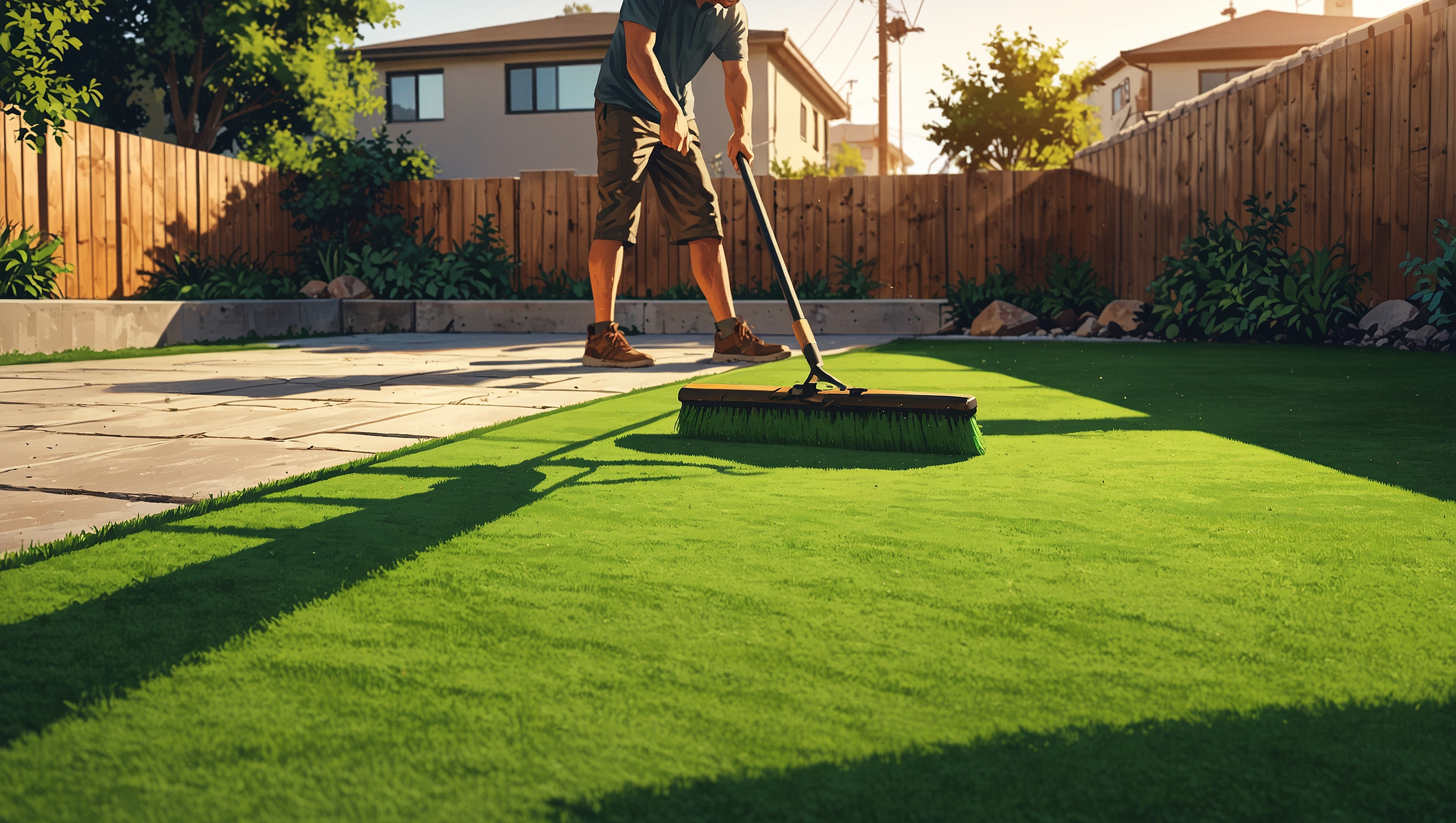
Why Routine Maintenance Matters
The difference between turf that looks great after 15 years and turf that looks worn out after 7 almost always comes down to one thing: did the owner clean it regularly?
A simple weekly routine prevents 90% of the common problems turf owners run into: matting, odors, discoloration, and drainage issues. It takes about 20 to 30 minutes a week. Compare that to the 2 to 4 hours you would spend mowing, edging, and watering a real grass lawn.
Pro Tip
Set a recurring reminder on your phone for turf maintenance day. Pick a day and time that works for you and stick with it. Consistency matters more than perfection. Even a quick 15-minute session is better than skipping a week entirely.
Weekly Maintenance: The Core Routine
Do these four steps in order, once a week. If you have pets or heavy foot traffic, do them twice a week.
Clear All Debris
Start by getting everything off the surface: leaves, twigs, pet hair, and any other junk. A leaf blower is the fastest tool, clearing a typical lawn in under 5 minutes. A turf rake works great for smaller areas.
A few things to watch for:
- Leaves: Remove within a day or two. They trap moisture, grow mold underneath, and stain your turf brown as they decompose.
- Pine needles: The worst offender. They are acidic, work their way into the infill, and clog drainage holes. If you have pine trees nearby, clear needles twice a week.
- Pet hair: Builds up gradually in the infill and reduces drainage over time. A stiff turf rake pulls it out better than a blower.
- Bird droppings: Acidic and can stain within hours. Rinse fresh droppings with water right away. For dried ones, soak with water to soften, then scrape gently and rinse.
Brush the Fibers
Brushing is the single most important thing you do for your turf. It keeps the fibers standing upright and prevents that flat, worn-out look. If fibers stay compressed too long, they start to permanently hold that flat shape.
How to brush properly:
- Use a stiff synthetic bristle broom or a dedicated turf brush. Never metal bristles.
- Hold the brush at a 45-degree angle to the surface.
- Brush against the grain (the direction that feels rough and lifts fibers when you run your hand across).
- Make 6 to 8 overlapping passes per section.
- Cross-hatch: brush the whole lawn in one direction, then again perpendicular to it. This catches fibers leaning every which way.
- Use moderate pressure. You want to reach the base of the fibers, not gouge the infill.
Warning
Never use a metal rake, wire brush, or any tool with metal parts on your turf. Metal tears and shreds synthetic fibers, causing permanent bald spots. This damage cannot be undone, and it voids your warranty. A proper synthetic turf brush costs $30 to $80 and protects a multi-thousand-dollar investment.
Rinse with Water
A good rinse washes away dust, pollen, and light pet residue. It also helps settle the infill back into place after brushing. Use a regular garden hose with a spray nozzle.
Rinsing tips:
- Work section by section so you get even coverage.
- Rinse in the direction of your drainage slope so water flows through the system.
- Give extra attention to pet areas, high-traffic zones, and shaded spots where moisture lingers.
- Do not use a pressure washer for weekly rinsing. It displaces infill and can damage fibers.
Did You Know
On hot days (above 90 degrees), a quick rinse before using the turf cools the surface by 30 to 50 degrees for about 20 to 30 minutes. It makes a big difference for bare feet, kids, and pets.
Quick Visual Inspection
Take a 5-minute walk around the whole lawn and look for anything developing. Catching problems early is always cheaper and easier than fixing them later.
What to look for:
- Stains or discoloration: Fresh stains are much easier to treat than old ones. See Chapter 5: Stain Removal for specific solutions.
- Missed pet waste: Check pet zones carefully, parting the fibers in their favorite spots.
- Weeds: Check along seams, edges, and borders. Pull them by hand, including the root.
- Infill issues: Look for areas where infill has washed away (you might see exposed backing) or piled up.
- Standing water: If water sits on the surface more than 30 minutes after rain, you have a drainage issue to address.
- Seam or edge problems: Run your foot along seams. You should not feel a gap. Check that edges are not curling up or pulling away.
Monthly Maintenance
Once a month, add these checks to your regular weekly routine. They only take an extra 15 to 20 minutes.
Check Infill Depth
Infill shifts over time from high-traffic areas to low-traffic spots. Part the fibers and check that the infill sits about 1 to 2 inches below the fiber tips. If some areas are low, brush infill over from spots that have too much, or add fresh infill.
Inspect Seams and Edges
Run your finger along every seam, feeling for gaps or soft spots. Walk the perimeter and check that edges are flat and secured. Small seam gaps can be fixed with turf adhesive. Edges that keep lifting might need new landscape spikes.
Treat Discoloration
If you spot any discolored areas, treat them now before they set in. Most discoloration comes from organic staining (leaves, debris), mineral deposits from hard water, or early mold. A turf-safe cleaner and a gentle scrub usually does the trick.
Pull Weeds
Pull any weeds that have popped up in seams or edges, roots and all. For persistent weed problems, apply a turf-safe pre-emergent herbicide along seams and borders to stop seeds from sprouting.
Recommended Product
Weed prevention tip: Use a pre-emergent herbicide labeled safe for synthetic surfaces. Apply it along seams and edges with a small sprayer. Avoid glyphosate-based products near turf since overspray can discolor fibers.
Quarterly Deep Maintenance
Four times a year, give your turf a thorough deep maintenance session. This tackles the gradual buildup that weekly care does not fully catch.
Power Brushing
A power brush (electric or gas rotary brush) gets deeper into the fibers than manual brushing can. It lifts fibers that have started to flatten despite weekly care and breaks up compacted infill. If you do not own one, rental shops carry them for $50 to $100 per day.
Heavy Rinse
Use more water than your weekly rinse, about double or triple the amount. Work section by section and give extra attention to pet zones and any areas with odor or discoloration.
Redistribute Infill
After power brushing and rinsing, check infill levels across the whole lawn. Three months of foot traffic shifts infill around. Move it from thick areas to thin spots, and add fresh infill if the overall level has dropped.
Antimicrobial Treatment
Apply a turf-safe antimicrobial product to keep bacteria and mold in check. Use a hydrogen peroxide-based product designed for synthetic turf, such as Turf Mist, which eliminates 99.9% of contaminants and is completely pet-safe. Spray it evenly, let it sit for 10 to 15 minutes, then rinse.
Drainage Test
Pour a bucket of water on one spot and time how fast it drains. It should disappear within 30 seconds on a healthy system. If it takes longer than a minute, you may have clogged drainage holes. Try loosening the infill in that area with aggressive brushing and flushing with water.
Pro Tip
Schedule your quarterly sessions at the start of each season: March, June, September, and December. These transitions align with changes in weather and debris that affect your turf differently throughout the year.
Seasonal Adjustments
Your maintenance routine should shift a bit with the seasons. Here is a quick guide.
Spring
Pollen is everywhere and weeds are waking up. Brush twice a week to lift fibers that settled over winter. Rinse more often during heavy pollen periods. Apply pre-emergent herbicide along seams and edges before weeds get established.
Summer
This is the highest-maintenance season. Heat accelerates matting, UV exposure, bacterial growth, and pet odors. Brush 2 to 3 times per week. Rinse twice a week (once for cleaning, once for cooling). Rinse the turf before kids or pets use it on hot days.
Fall
Leaves are the big challenge. Remove them daily during peak leaf fall since they trap moisture and stain fibers fast. Do a thorough deep clean before winter to clear out all the organic material that accumulated.
Winter
This is the lightest season for maintenance. Brush monthly or after storms. Skip rinsing when temperatures are below freezing. Never walk on frozen turf since the fibers become brittle and can snap. Remove snow gently with a plastic shovel, never metal. Let ice melt naturally instead of using salt or chemical de-icers.
Warning
Never brush, rake, or work frozen turf. When temperatures drop below 20 degrees, turf fibers become brittle and will snap instead of bending. Wait for a sunny afternoon to thaw the surface before doing any maintenance.
Pet Owner Extras
If pets use your turf, add these steps to your routine. Pet waste is the number one source of turf odor and bacterial problems.
Daily
- Pick up solid waste immediately. In warm weather, it starts breaking down into the infill within an hour or two.
- Rinse urine spots with the hose. Fresh urine has not formed crystals yet, so a quick rinse flushes it through the drainage. Once crystals form and bond to the infill, they are much harder to remove.
Weekly
- Apply a hydrogen peroxide-based turf cleaner like Turf Mist to all pet zones. Hydrogen peroxide oxidizes uric acid on contact, which is the only way to truly eliminate (not just mask) pet odors.
- Give pet areas an extra-thorough rinse after the treatment.
Monthly
- Apply antimicrobial treatment to pet zones (do not wait for the quarterly schedule).
- Check infill levels in pet areas. Favorite spots wear faster, and digging can displace infill quickly.
Pro Tip
If possible, train your pet to use one designated potty zone of about 50 to 100 square feet. This concentrates the cleanup effort in one area, keeps the rest of your lawn much cleaner, and makes hydrogen peroxide treatment and infill replacement more targeted and affordable.
Fell Behind? How to Recover
Life happens. If you have skipped maintenance for a while, here is what to expect and how to bounce back.
1 Month Behind
You will see some matting and dullness, but recovery is easy. Remove debris, rinse everything, brush thoroughly with extra passes on matted areas, treat pet zones with a hydrogen peroxide cleaner if needed, and get back on your weekly schedule. Takes about 1 to 2 hours.
3 Months Behind
Expect moderate matting, possible mold in shaded areas, noticeable odor in pet zones, and maybe some weeds. Pull weeds first, then rinse heavily, power brush the whole surface, apply antimicrobial treatment, check and top off infill, and do twice-weekly maintenance for a month to fully recover. Budget 3 to 4 hours.
6+ Months Behind
At this point, some fiber damage may be starting to set in permanently. You will need a full day of work: removing embedded debris, pre-treating with hydrogen peroxide cleaner, power brushing aggressively, heavy rinsing, antimicrobial treatment, and possibly replacing infill in pet areas. Do twice-weekly maintenance for at least 6 weeks after.
1 Year or More
Get a professional assessment before trying to fix it yourself. You may be dealing with permanent fiber matting, contaminated infill that needs replacing, or drainage system failure. Professional restoration costs $2 to $5 per square foot, which is still much less than full replacement at $8 to $15 per square foot.
Did You Know
Even severely neglected turf can usually be recovered to 70% to 80% of its original condition with professional restoration. Full replacement is typically only needed when the backing has failed or fibers have actually broken off (not just flattened).
Your Maintenance Calendar
Here is a simple summary you can stick on the fridge or save on your phone.
Every Week (20 to 30 minutes)
- Remove debris (5 min)
- Brush against the grain in a cross-hatch pattern (10 to 15 min)
- Rinse the surface (5 min)
- Visual inspection walk (5 min)
- Pick up pet waste daily if applicable
Every Month (add 15 to 20 min)
- Check infill depth in several spots
- Inspect all seams and edges
- Treat any stains or discoloration
- Pull weeds
- Antimicrobial treatment on pet zones
Every Quarter
- Power brush the whole surface
- Heavy rinse
- Redistribute and top off infill
- Antimicrobial treatment on the full lawn
- Test drainage
Every Year
- Consider a professional inspection
- Full infill assessment and replenishment
- Evaluate overall condition and plan any repairs
For the full deep cleaning process, see Chapter 3: Deep Cleaning. For detailed seasonal care, see Chapter 6: Seasonal Maintenance.
Frequently Asked Questions
Once a week for most residential lawns. If you have pets, kids, or heavy foot traffic, bump it up to two or three times a week. Always brush against the grain for the best results.
Not for growth, but a weekly rinse with the garden hose washes away dust, pollen, and light pet residue. In hot weather, a quick rinse also cools the surface down so it is comfortable to walk on.
Remove them within a day or two. Leaves trap moisture, promote mold, and stain fibers as they decompose. A leaf blower is the fastest way to clear them.
About 20 to 30 minutes per week for a typical residential lawn. That breaks down to about 5 minutes for debris, 10 to 15 for brushing, 5 for rinsing, and 5 for a quick visual check.
Not for weekly cleaning. A pressure washer blows out infill and can damage fibers. Stick to a regular garden hose. Save the pressure washer for quarterly deep cleans, and even then, keep it under 1,500 PSI with a wide-angle tip.
After a month, you will see matting and dullness. After three months, odors and mold can set in. After six months, some fiber damage may be permanent. Recovery is always possible, but it gets harder and more expensive the longer you wait.
Get the Complete Turf Cleaning Handbook
All 8 chapters, bonus checklists, seasonal schedules, and product recommendations in a beautifully designed, downloadable PDF.
Buy the HandbookInstant download. 30-day money-back guarantee.